Skip to content
LensHooke® X1 PRO · A Bonraybio CASA system

Automated semen analysis, at the point of care.

The LensHooke X1 PRO is a compact semen quality analyser that brings a full CASA assessment to the bench. AI optical microscopy reads more parameters — concentration, motility, morphology and pH — in minutes. No slides, no manual counting.

CE 0197WHO 5th edition methodologyResults in ~5 minutes
LensHooke® X1 PRO  / AI optical microscopy
LensHooke X1 PRO held in one hand
Concentration
62M/ml
Total motility
58%
Morphology
7%
pH
7.8
Example readout · held in one hand · 140 mm benchtop footprint
4
key WHO parameters per automated run
~5min
from sample to full CASA report
140mm
portable, benchtop footprint
WHO 5th
edition reference methodology
01
Overview

More parameters, from a single automated run

The LensHooke X1 PRO is a semen quality analyser that reports a fuller CASA parameter set — to evaluate sperm quality and motility in more depth than a basic count. AI optical microscopy does the reading, so every result is standardised, objective and fast.

The device

A palm-sized analyser with a 3.5″ colour touch panel and Full-HD, real-time imaging. Auto-focus optics read the sample directly — no microscope, no slide preparation.

What CASA means

Computer-assisted sperm analysis: automated measurement of concentration, motility and morphology from video microscopy, following WHO 5th edition methodology.

Made by Bonraybio

Engineered by Bonraybio and supplied through LogixX Fertility. Distributed by Hamilton Thorne in the USA, Singapore and Spain.

02
Who it's for

Built for the people who read the results

Wherever semen analysis happens — a clinic room, a lab bench, a research site — the X1 PRO standardises the measurement and keeps the sample in-house.

Fertility & IVF clinics

Baseline male-factor screening and treatment monitoring, chairside — without the send-out delay.

Andrology laboratories

A fuller CASA parameter set with built-in quality control for repeatable, auditable results.

Urology & men's health

Fast, in-office semen analysis so patients get answers within the same visit.

Research & academia

Standardised, reproducible measurement to WHO methodology across study sites.

03
What it reads

Every result that matters, in one run

The X1 PRO reports the core WHO semen parameters from a single test cassette — measured by AI optical microscopy rather than manual estimation.

Parameter
Method
Detection range
01

Concentration

Sperm count per millilitre, across a wide detection range.
<2–300 ×10⁶/ml
02

Motility

Total, progressive and non-progressive movement.
<2–100%
03

Morphology

Percentage of normal sperm forms.
<2–100%
04

pH value

Seminal pH on a fine measurement scale.
6.0–8.0 · 0.2 steps
04
Evidence

Validated against manual lab analysis

In a peer-reviewed validation study using WHO 5th Edition methodology, the X1 PRO showed strong correlation and agreement with laboratory-based manual semen analysis across concentration and motility.

≥0.92
Rank correlation
with manual analysis (p<0.0001)
100%
Positive predictive value
detecting abnormal concentration
97.7%
Positive predictive value
identifying normal sperm forms
>0.91
Inter-rater κ
high reproducibility vs. MSA

Reference: Validation of LensHooke® X1 PRO and CASA compared with laboratory-based manual semen analysis, World Journal of Men's Health.

05
Method

Three steps, two to five minutes

From specimen to a full CASA report — no slides, no staining, no manual counting.
01

Apply the specimen

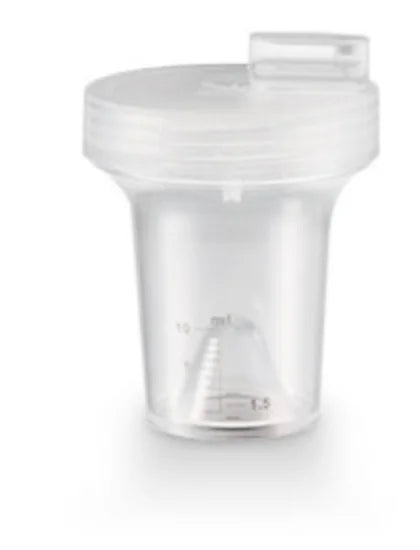
Specimen collection container

After 2–5 days' abstinence, collect into a clean container and apply to the cassette — no lubricant or saliva.

02

Insert the cassette

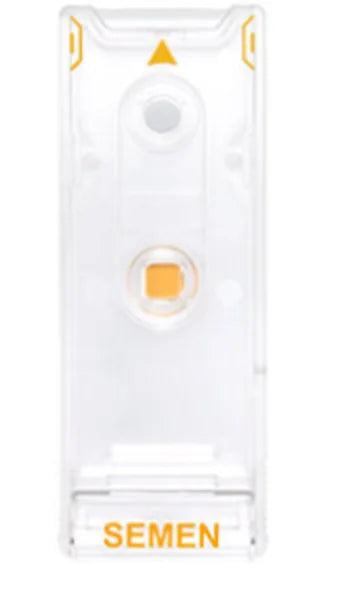
Single-use test cassette

Slide the single-use cassette into the X1 PRO until it clicks into place.
03

Read the result

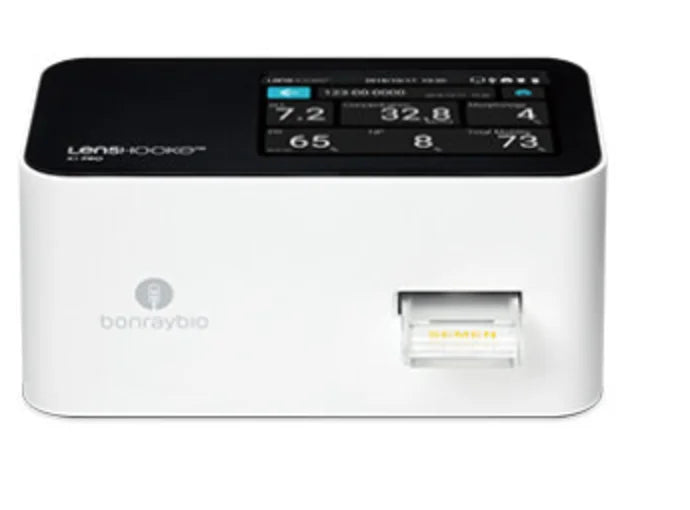
X1 PRO showing CASA result on the touch panel

AI optical microscopy analyses the sample and shows a full CASA report on the 3.5″ panel in minutes.
06
Features & benefits

Built for the detail clinicians need

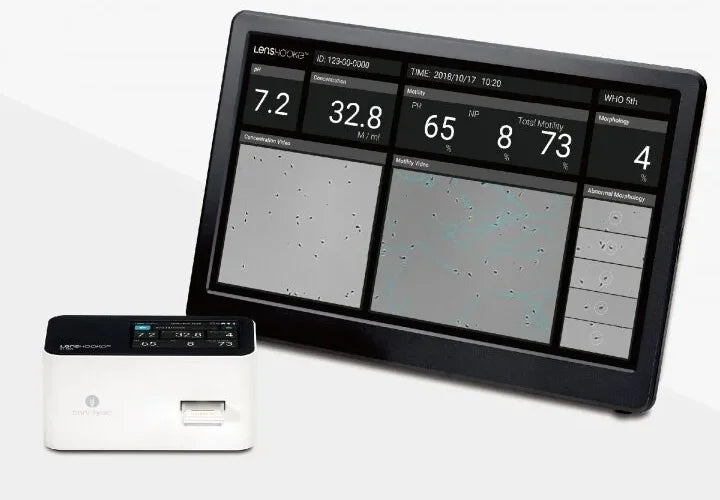
Full HD analysis shown on an external monitor
Full-HD analysis on an external monitor
06.1

Auto Focus & Full HD

The X1 PRO captures 1080P Full-HD dynamic images, so medical personnel can examine sperm morphology immediately and in detail on screen.
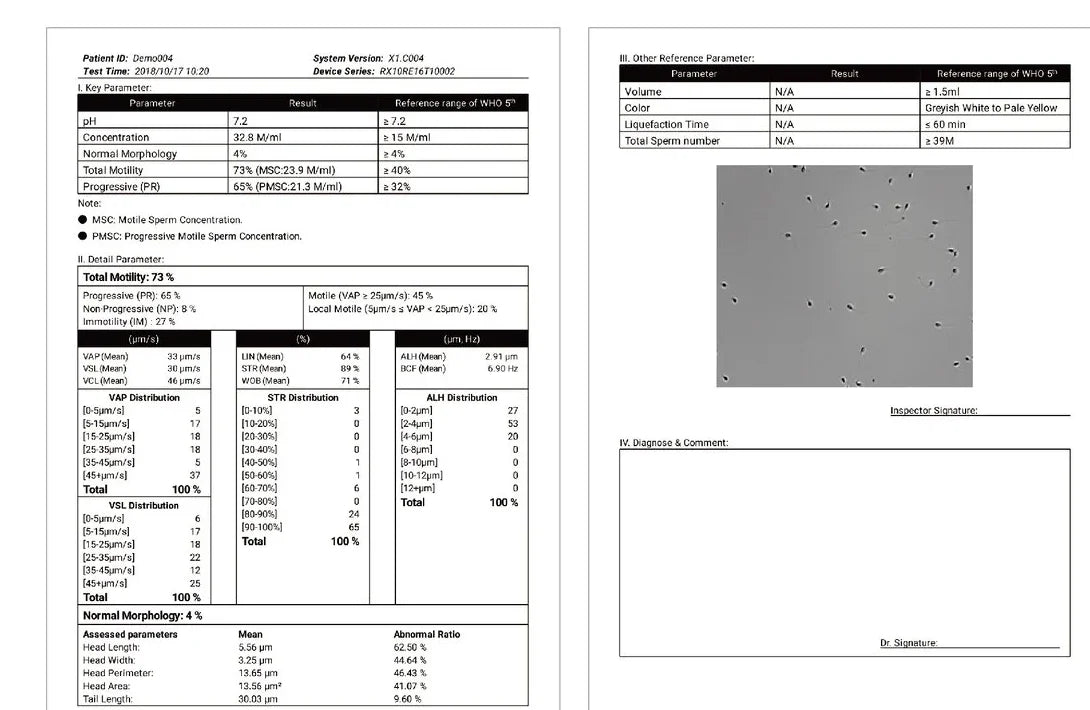
Two-page CASA report
CASA report · WHO 5th parameters
06.2

Full CASA report

It reports a fuller set of CASA parameters to evaluate motility in depth — well beyond a basic count — in diversified report formats.

MSCPMSCVAPVSLVCLLINSTRWOBALHBCF
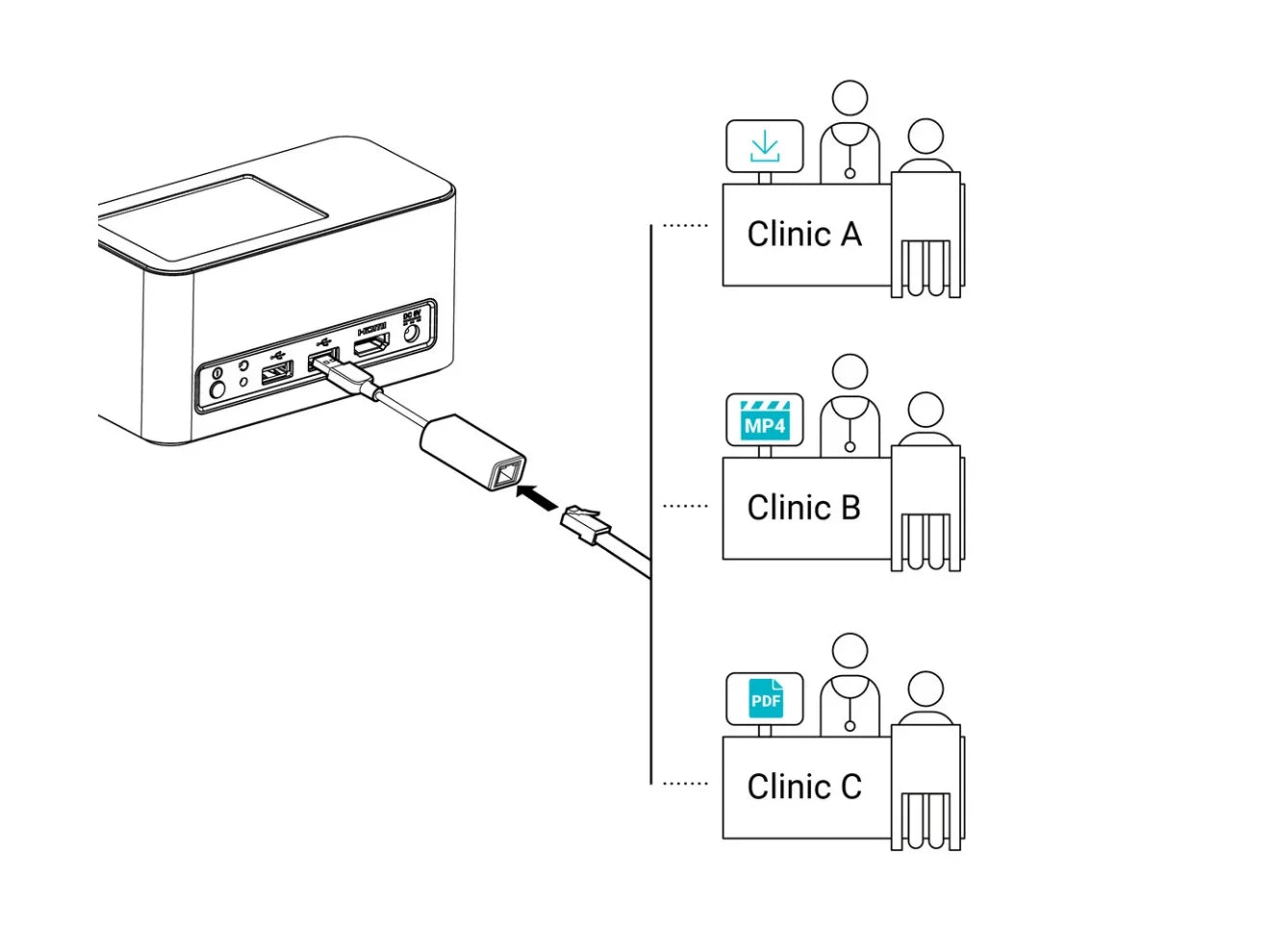
LAN connection sharing results across clinics
Result sharing across clinic sites
06.3

LAN connectivity

Networked computers and laptops can access the analyser to preview or download result files and videos — shared across multiple clinic sites.

Configure IP preference

Set a fixed IP so the analyser sits cleanly on your clinic network.

Tablet connection

Mirror the live view and reports to a tablet right at the bench.

Customised reports

Add clinic details and layout; export the format each site prefers.

Quality control

Run X QC Beads across three levels to verify accuracy monthly.

07
Specifications

The technical detail

DeviceLensHooke® X1 PRO
TechnologyAI optical microscopy (AIOM)
Dimensions140 × 70 × 71.2 mm
Control panel3.5″ resistive touch
Resolution320 × 480 colour dot matrix
Input / outputUSB 2.0 / HDMI
PowerAC 100–240V · DC 5V/2A
BatteryRechargeable Li-Po 2500 mAh
Operating range15–38°C · <70% humidity
CertificationsCE 0197 · FDA · ISO 13485 · GMP
08
Support

Frequently asked questions

Guidance for clinics and labs using the LensHooke X1 PRO — device operation, quality control, clinical method and warranty.

What do the three coloured lines in the HDMI video mean?
The light-blue line is progressive motility (PR), the dark-blue line is non-progressive motility (NP), and the yellow line is immotility (IM).
How long does the analyser take to fully charge?
About two hours to fully charge the battery.
How long does the battery last once fully charged?
About three hours.
How do I download the PDF report?
Insert a USB drive (1 GB or larger) into the analyser. Open Utilities → Backup All Records, select Backup, then OK to complete the backup. Insert the USB drive into your PC or laptop to preview or download the records. Alternatively, connect an RJ45 Gigabit Ethernet adaptor to network the analyser and preview or download results over LAN. See the X1 PRO user manual for details.
What does the “*” symbol next to a result mean?
A “*” beside the concentration value indicates the sample may contain aggregation, crystals or bubbles, which can affect the result. Re-run the test or note it on the record.
What should I know about using the LAN function?
Use an RJ45 Gigabit Ethernet adaptor with a Realtek RTL8153 or SMSC 7500 chip. Open the access web page with Firefox 62+, Chrome 69+, or Microsoft Edge on Windows 10.
What sample volume can the cassette hold?
The anti-leakage design holds around 900 µL to prevent overflow. The analyser can in theory detect from ~0.5 µL, but applying 40 µL to the cassette is recommended.
Can I use cassettes from other boxes with the licence dongle?
Use only cassettes manufactured and supplied by Bonraybio Co., Ltd. Cassettes are single-use — do not reuse them. Each box contains 50 cassettes and one licence dongle holding 50 matching licences, so reusing or losing a cassette breaks the match with your dongle. See the user manual for details.
How do I check sample liquefaction with C-KUP™?
Invert the C-KUP™ a few times so the sample is drawn through the patented V-Stick. Per WHO 5th criteria, if the sample forms 2 cm threads it is not fully liquefied — rest it on a flat surface (or in a 37 °C incubator) for 30 minutes. Discrete drops mean it is liquefied and ready to test. Avoid bubbles. The distance from the bottle apex to the V-Stick is calibrated to exactly 2 cm.
Why does the screen show “Insufficient Storage Available”?
Storage is full — back up, then delete records. Insert a USB drive (≥1 GB), open Utilities → Backup All Records → OK, then Utilities → Delete All Records to free space. Deleted records cannot be recovered.
Why does the screen show “Movement detected”?
The analyser detects motion to avoid capturing a blurred image. Select OK, remove the cassette, and place the analyser on a stable flat surface. Do not move the surface, cassette or analyser during analysis. Re-insert the cassette and analysis restarts automatically.
How many times can one bottle of X QC Beads (For Semen) be tested?
Up to ten times within 90 days. Keep refrigerated when stored.
May I repack the X QC Beads (For Semen)?
No. Unauthorised repacking is not recommended and may lead to inaccurate results. Once the screw cap is opened, store at 2–8 °C and use within 90 days. Do not freeze.
What sample volume does a bottle contain?
A set contains three bottles, each a different concentration level, at 2 mL each.
What concentration levels do the QC Beads cover?
Three colour-coded levels: Negative Control (0 M/mL), Level 1 (25 M/mL ±8) and Level 2 (50 M/mL ±12). Exact Level 1 and Level 2 values vary slightly by batch, so check that the box label and bottle label match. Contact the customer service centre with any questions.
How often should I run a quality control test?
At least once a month, using all three concentration levels of the X QC Beads (For Semen).
What is the shelf life of the QC Beads?
An unopened vial lasts 2 years. Once opened, store at 2–8 °C and use within 90 days. Do not freeze.
What should I do if the QC test fails more than twice?
Repeated failures may mean the beads are expired, inverted, or mixed between concentration levels. Re-run the QC test with new QC beads, a new cassette, a new dropper and fresh drops.
Which clinical comparison sites are used globally?
Taiwan: Chung Shan Medical University Hospital, Lin Shin Hospital, Lee's Woman Hospital, Min Sheng Hospital, Taipei Veterans General Hospital. USA: Cleveland Clinic. Italy: Ecofoodfertility and Stanford University, across different clinical projects.
How much sample should a pipette apply to the test area?
Apply 0.04 mL onto the drip area of the cassette.
Must the sample be liquefied before testing?
Per WHO 5th, the sample should be fully liquefied within 1 hour. Place it in a 37 °C incubator for 30 minutes, or rest it on any flat surface for 30 minutes, then check whether it has liquefied.
How does the algorithm assess morphology?
It uses Kruger criteria, with a built database to evaluate whether each sperm is morphologically normal or abnormal.
How do I know it counts 200 sperm?
WHO 5th recommends counting at least 200 sperm for motility and morphology. A concentration above 20 M/mL means more than 200 were counted; below 20 M/mL, the analyser counts the entire field of view.
How is the accuracy of a result confirmed?
WHO 5th defines acceptable difference ranges for sampling and testing — see Table 2-5 §2.8.5 for concentration, Table 2-1 §2.5.3 for motility, and Table 2-1 §2.17.2 for morphology. A result outside the range suggests a sampling error; redo the sampling and test.
How long is the analyser warranty?
The warranty lasts one year.
What is the return process and turnaround time?
Notify your local distributor or responsible account and return the product. They file an anomaly order with the Customer Service Centre, which analyses the unit once received. Expect about 10 working days for the analysis and a decision on whether it falls within the warranty scope (in-warranty, non-human cause) or outside it, along with the repair and return timing.
Request a quote

Bring lab-grade analysis to your clinic

Tell us your setting and volume, and our team will prepare a quote for the LensHooke X1 PRO, test cassettes and QC beads — with validation data and certificates of analysis on request.

The LensHooke product range is sold exclusively by LogixX Fertility Ltd in the UK. For in vitro diagnostic use by trained professionals.